You see water in an EV charging port. Dry it before you plug in. Wipe the housing, leave the door open a few minutes, then connect. That check belongs on Orange County’s coast. Cars sit for hours in Huntington Beach, Newport Beach, Seal Beach, Laguna Beach, Dana Point, and San Clemente lots. Then they roll to a plug with salt air still on the paint. Beading on the door is common. Water sitting on the pins is not. Don’t charge through a puddle.
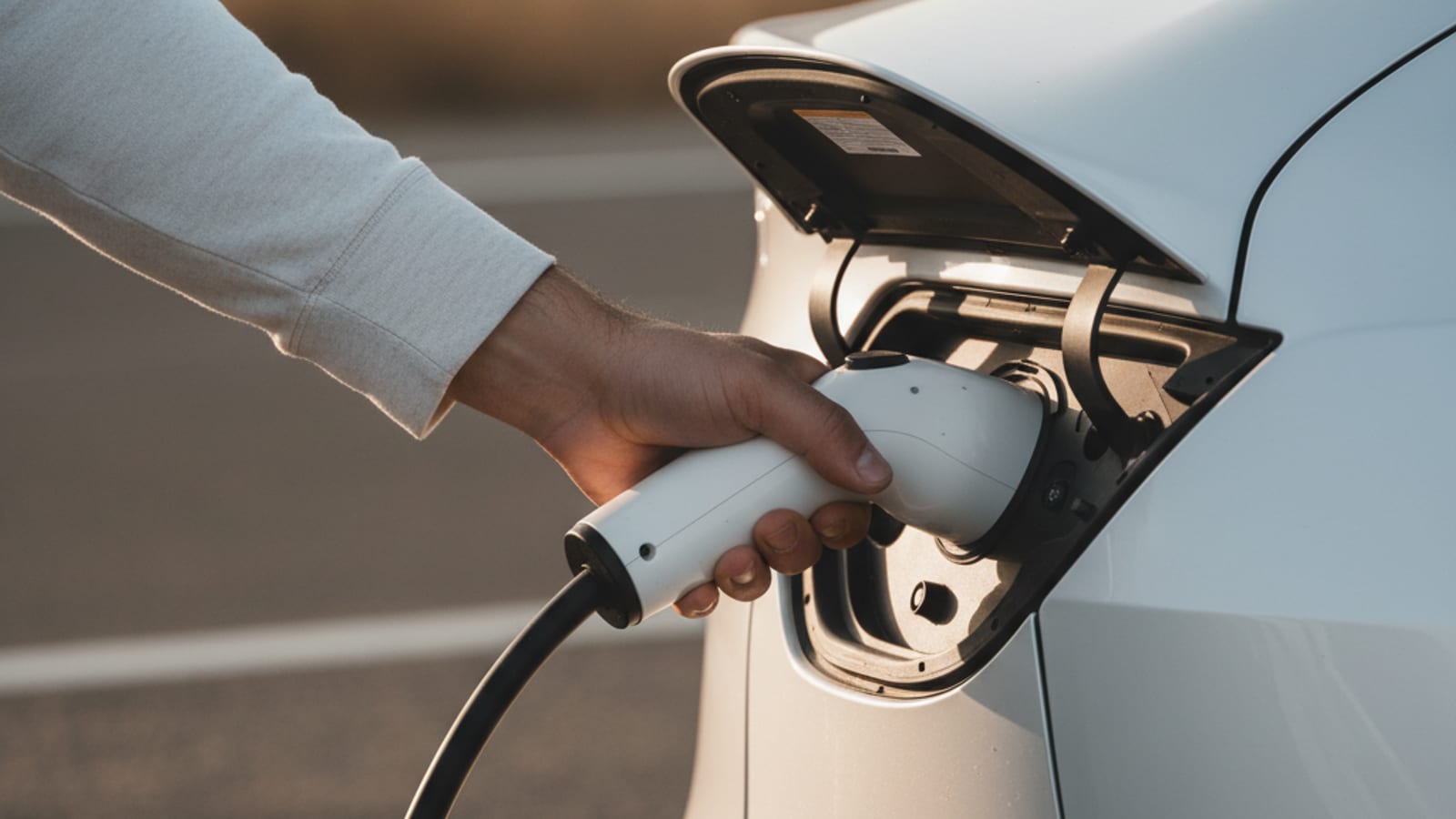
Wet ports after a coastal Orange County lot day
Orange County had 210,842 battery-electric vehicles on the road as of December 31, 2025. That’s the California Energy Commission’s county count, not a guess. Teslas make up 65.51% of those battery-electric cars. A NACS port on a Tesla is the one most owners here will open after the beach. CCS and J1772 ports pick up the same moisture.
The Huntington Beach Supercharger at 6913 Warner Avenue is a typical next stop after a long day on the sand. Twenty-four stalls, up to 325 kW per the federal station data. Newport Beach has a Tesla site at 4241 MacArthur Boulevard. Fashion Island’s Electrify America station at 401 Newport Center Drive adds eight DC fast ports if you’re already in that center. Our note on EV charging near Fashion Island is the map for that block.
Seal Beach puts charging on Pacific Coast Highway itself. EVgo lists four DC fast stalls at 801 Pacific Coast Highway. South of there, Dana Point has a large Electrify America site. It’s at 25825 Las Vegas, in Capistrano Beach. Twelve DC fast ports, the largest non-Tesla site in south Orange County. San Clemente’s Tesla site at 101 W Avenida Vista Hermosa has 49 stalls. Beach traffic uses all of these. Open the port with the same care at each one.
Inland Orange County still gets overnight dew. The coast adds lot spray, damp air, and a car that sat close to the sand. Park with the port facing a planter and you can also catch irrigation overspray in the morning. Close the door fully when you’re not plugged in. Face the port away from sprinklers when you can.
You left a beach lot with a damp port. The first plug you reach might be Warner Avenue, Pacific Coast Highway, or South Coast Drive. Dry it before that connector goes in.
Condensation, splash, and water on the pins
A modern charge port is built for weather. The pins sit behind a spring door. The connector uses a gasket once it’s seated. Rain on a closed door is normal use. Light splash on an open door usually is too.
Water in an EV charging port becomes a real problem in three cases. First, standing water deep enough to wet the pins. Second, water forced in under pressure, like a washer jet held close. Third, moisture that’s sat long enough to leave corrosion you can see.
What most people find is condensation. A film on the plastic. A few beads at the lip of the door. It looks worse in bright sun than it is. It often wipes off in a second and never touches a contact.
The pack and the port are not the same system. The two systems stay isolated from each other. Water at the connector is a charging-circuit concern. It’s not a hole into the battery. Ignore a corroded pin and later sessions get flaky. Dry it now. Don’t live with a connection that only works some of the time.
Wipe, wait, then watch the first seconds
Look before you plug in. If you see water, your next move is a cloth, not a connector.
Use a dry microfiber towel. Wipe the housing you can reach. Don’t gouge at the pins. Don’t stuff fabric into the latch. You’re clearing the opening, not packing it.
If you’re not rushing, leave the door open 10 to 15 minutes. Moving air in the shade dries a port better than a sealed garage. Skip the hair dryer. Skip a heat gun. Skip pointing the cabin vents at the pins. Heat can warp the plastic and the seal. That’s a worse failure than the water.
When it looks dry, plug in one time. Watch those first seconds. A charge that starts and holds means the port did its job. A charge that starts, dies, and throws an error means stop. A door that won’t latch after you unplug means stop too.
Public stalls add another wrinkle. The session can look connected and still not add range. Run that checklist only after the housing is actually dry.
Signs this is more than a damp door
A few cues mean you’re done with home care. A burning smell or a hot-plastic smell at the port. Corrosion on a pin you can see. The same fault on a dry port, same cable, more than once. A door that sits open a crack and will not close.
Don’t keep retrying. Don’t force more charge cycles on a suspect port. A small fault can turn into a shop visit. If the handle will not release, that’s a latch, not leftover water. Follow the steps to free an EV charge cable that’s stuck in the port. Don’t yank it.
If the car is dark and silent, check the 12-volt problem before you blame the port. After a long beach day the 12-volt can quit even when the pack still has range. That’s the stall we cover for a Huntington Beach lot after a long day. A wet port and a dead 12-volt can show up on the same afternoon. Treat them as two checks, not one.
Stuck in the lot with no session starting
Orange County has a real public charging network. As of December 31, 2025, the Energy Commission counted 7,095 public ports in the county. That includes 1,475 public DC fast ports. AFDC station data shows 223 DC fast stations and 1,452 DC fast ports countywide. Tesla holds 861 of those DC fast ports, 59% of the county total. After a beach day the busy sites are the ones you already know. A wet port that faults is a poor time to sit in that line. Don’t keep inserting the same handle.
Charge Pro OC is a referral line. We match stranded EV drivers with independent local mobile rescue operators. We don’t do the work ourselves. We don’t own trucks. We don’t employ technicians. We don’t set prices. The pros we connect you with are licensed and insured. The operator quotes you before starting and bills you directly.
If the port is dry and you just need range, call for a mobile charge. The operators we connect you with bring a 240-volt Level 2 source. Teslas get a native NACS plug. Other brands use a CCS or J1772 adapter. Operators typically add 10 to 20 miles of range in 15 to 30 minutes of charging. That’s time on the plug, never a promise about arrival. Start with mobile EV charging if the port is dry and the pack is empty.
If the port looks damaged, say that when you call. The operator can look at the car on site. Actual repair is a shop’s job. We don’t do that work.
We serve every city in Orange County. Coastal north county through Huntington Beach and Seal Beach. The Newport and Costa Mesa side. South county lots in Dana Point, San Clemente, and Laguna Beach. Inland cities get the same connection.
If the car still will not take a charge after you dry the port, call (949) 444-0151. We’ll connect you with a local independent operator who can assess the car where it sits.
Frequently asked questions
Is water in an EV charging port dangerous?
Usually it isn’t. Ports are designed for rain and splash. Light condensation almost never reaches the pins. Standing water on the contacts is different. So is water forced in under pressure. Those are the cases that actually raise risk.
Can I still charge if the port looks wet?
Wipe it first. Then give the open port 10 to 15 minutes of air. If water is pooled in the housing, stop. If the car faults when you try, stop. Don’t keep plugging in on a wet connector.
What should I never use to dry a charge port?
Don’t use a hair dryer, a heat gun, or any direct heat on the pins or the housing. Heat can warp plastic and hurt the seal. A dry cloth and open air handle almost every coastal lot.