When a Genesis GV60 won’t start, the 12-volt battery is usually the reason. The traction pack can still hold plenty of range. The small 12V that wakes the computers is what quit. That pattern shows up on gated South County streets. A GV60 or Electrified GV70 can sit for days in an HOA garage.
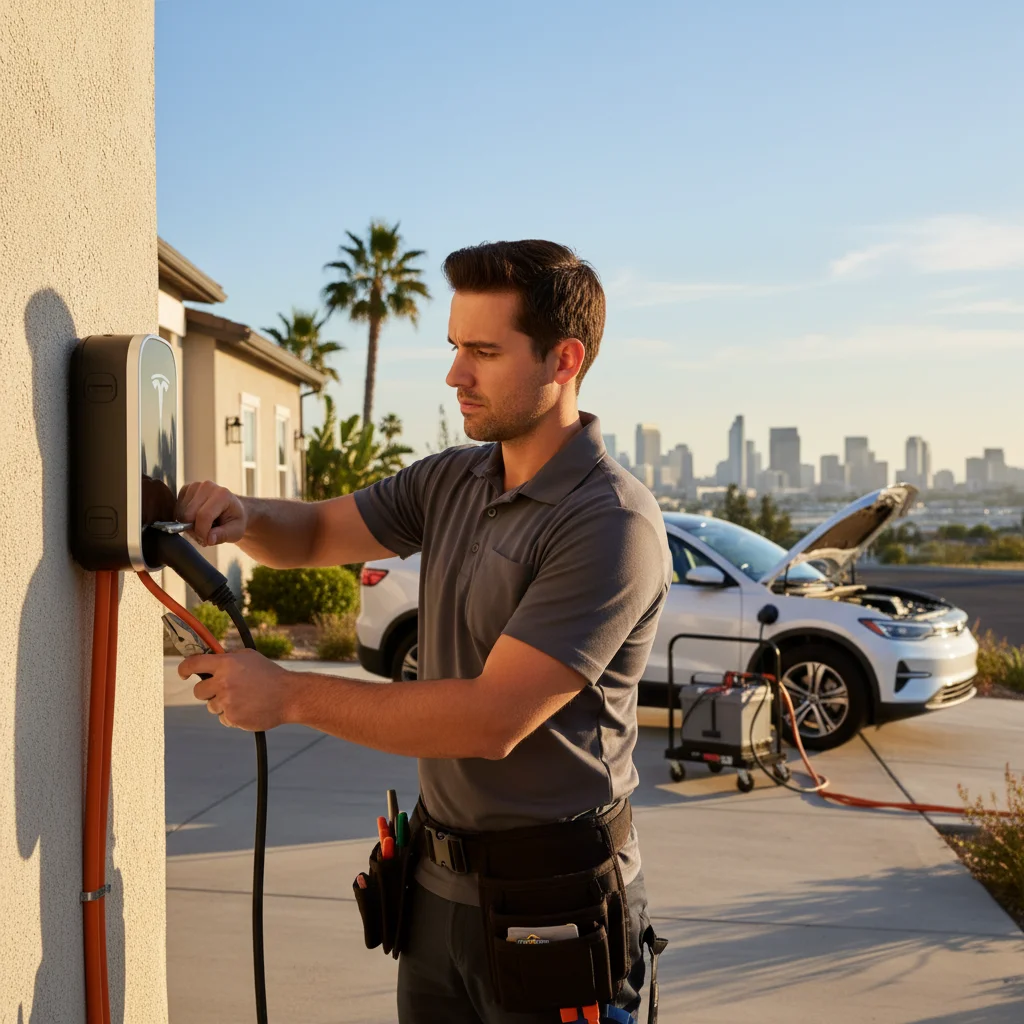
You’re not looking at an empty pack in that moment. You’re looking at a car that can’t boot. Door handles stay flush and the screens stay black. The fob feels dead even with a fresh coin cell. That’s the 12V, and E-GMP cars share this failure.
A silent Genesis isn’t an empty Genesis
Treat a dark car and a talkative car as two different jobs.
A dead 12V goes fully dark. There’s no chime, no interior lamps, and no welcome screen. The charge-port door may ignore the button. The frunk release may do the same. You might hear one faint click, then silence.
An empty pack still talks to you. The dash wakes, and range warnings come up. The car just won’t go into drive. Jumping the 12V does nothing in that case. You need range added at the curb.
If you’re unsure, start with the dark-car checks. They’re the common miss on this badge. When the 12-volt dies, why the EV looks completely dead maps that cascade in plain words.
One more split: screens work, but a cable is stuck in the port. That’s not a 12V jump, so free the latch first. How to free an EV charge cable that’s stuck in the port covers that sequence.
Gated South County parking is where a 12V quietly quits
Picture a GV70 in a Coto de Caza garage for a long week. A GV60 on a Laguna Niguel cul-de-sac does the same while you’re away. Ladera Ranch HOA structures produce that sit, and so do Aliso Viejo’s planned streets. Mission Viejo guest parking fits too, along with Irvine and Lake Forest garages.
A 12V hates that schedule. You may have ended the last drive low after a hill. The pack can still show some range. On E-GMP cars, a very low pack can stop topping off the 12V. Leave the car there a few days and the auxiliary battery finishes the drain. You walk back with the fob, press start, and get a brick.
Rancho Santa Margarita and San Juan Capistrano add grades. The last miles of a commute often cost more energy than a flat Irvine loop. Dana Point harbor lots add long sits, and so does San Clemente beach parking. The sit is the problem, not a hunt for a stall. It’s a car sitting still with a tired 12V.
Once the car will move, you can aim for named DC fast sites. Mission Viejo’s Tesla Supercharger at 27741 Crown Valley Parkway has 24 stalls. Laguna Hills has 16 Supercharger stalls at 23701 Moulton Parkway. AFDC lists those at up to 250 kW. Another 16 stalls sit at 25248 Cabot Road, also up to 250 kW. Lake Forest has 24 stalls at 24301 Muirlands Boulevard. San Juan Capistrano has 12 stalls at 26701 Verdugo Street. Electrify America lists 12 CCS DC fast ports at 25825 Las Vegas in Capistrano Beach. EVgo lists 14 DC fast ports at Plaza Antonio. That’s 22351 Antonio Parkway in Rancho Santa Margarita. It also lists eight ports at 27542 Antonio Parkway in Ladera Ranch.
Those plugs only help a car that already wakes. If you’re still dark behind a gate, hunting a stall doesn’t help. The operator has to reach the driveway. Laguna Niguel EV stalled behind a gate: 240V help that comes inside is that access problem on a different badge.
Orange County had 210,842 battery-electric vehicles on the road as of December 31, 2025. That’s the California Energy Commission’s count. Tesla made up 65.51% of that BEV fleet. Genesis, Hyundai, Kia, and the other non-Tesla nameplates sit in the remainder. The same CEC file counted 7,095 public charging ports in the county. That’s about 36.8 ZEVs per public port. A silent GV60 can’t use any of them until the 12V comes up.
The E-GMP 12V under the Genesis badge
The GV60 and Electrified GV70 sit on Hyundai’s E-GMP architecture. That’s the same family as the Ioniq 5 and the Kia EV6. They share the two-battery layout. They also share the way a weak 12V locks out a healthy pack. Jump terminals live in the engine bay, so you don’t clip to obvious battery posts.
Hyundai Ioniq 5 won’t start: the 12V checks to run first is the sibling write-up.
Two batteries, two jobs. The high-voltage pack turns the motors. The 12V wakes modules, locks, and lights. It also wakes the computer that closes the contactors. Kill the 12V and the pack is still there, just unreachable.
Parked low, then left for days, is the usual trap. The range number you remember from last week doesn’t save you. The 12V already quit.
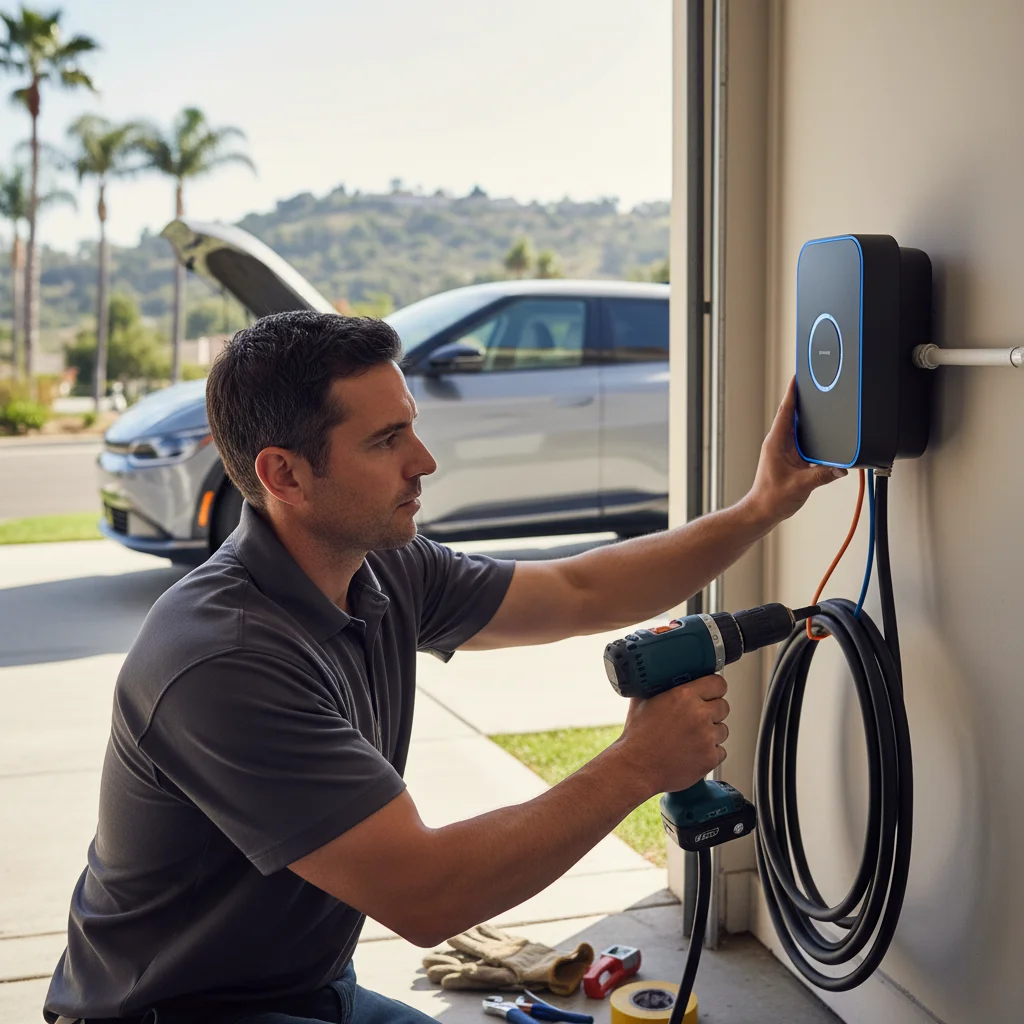
Clip the cables at the jump posts, not at a hidden battery
The battery’s own posts aren’t the jump points you want. On a GV60 the 12V lives up front under the hood. That’s the same general neighborhood as an Ioniq 5. On the Electrified GV70 it can sit under trim, out of easy view. Either way, jump from the designated terminals in the engine bay.
| What you’re looking for | Where it usually is |
|---|---|
| Driver’s-side fuse box under the hood | Positive jump post under a red cap |
| A bare, unpainted chassis bolt | Negative ground, not the battery’s minus post |
| Front compartment or under trim | The actual 12V battery |
Year and trim vary. If the bay doesn’t match this, stop. Open the owner’s manual for your model year. Don’t probe around orange high-voltage cables looking for a shortcut.
A compact jump pack is cleaner than a second car. If you use another vehicle, keep it a conventional 12V system. Don’t treat a running EV as a gas-style donor. That can strand both of you.
If you can’t pop the hood from inside, don’t force the panel. That’s the moment to stop DIY and call for an operator.
Jump it, then treat the wake-up as temporary
How to jump start an electric car without making it worse is the full safety pass.
- Use the interior hood release. A dark car may still open from inside.
- Find the black fuse-box cover on the driver’s side of the bay.
- Flip the red cap so the positive post is visible.
- Clamp red to that post.
- Clamp black to a clean metal bolt on the chassis or a strut tower.
- Leave the battery’s own negative post alone.
- Power the jump pack, or start the donor car if you’re using cables.
- Wait a minute or two so the Genesis 12V can take a little charge.
- Press start and give the boot extra seconds. Modules come up slowly after a flat 12V.
Polarity matters. Red goes to the capped positive post only. Black goes to chassis ground only. Reverse that and you can damage modules. Keep clamps off moving fans and orange HV lines.
If it wakes, don’t shut it down in the driveway to test it. Keep it on. Drive it, or plug it in so the pack can resume supporting the 12V. A single jump is a wake-up, not a repair.
If it dies again on the next drive, the 12V is done. Replacement is the next step. Don’t do another jump in the same lot. Your EV 12V replacement guide: signs, timing, and what to do walks through that without a price. Charge Pro OC doesn’t publish one. The operator quotes you if they replace it on site.
When the pack is empty and the 12V is fine
Skip the cables if the car is talkative. Lights on and screens on point to the pack. A low-range warning means the traction battery needs energy. The pros we connect you with bring a 240V Level 2 source to the car. For a Genesis they use a CCS adapter. They’ll use a J1772 adapter if that’s what the port needs. Native NACS is for Teslas.
Typical charging time on site adds about 10 to 20 miles of range in 15 to 30 minutes. That’s charging time, not a promise of when someone arrives. That bump is meant to reach a stall or home. It isn’t meant to finish a road trip at the curb.
Once you’re rolling, you can aim for a listed plug. Crown Valley, Cabot, Muirlands, and Verdugo are Tesla Supercharger sites named above. The Capistrano Beach Electrify America site is the CCS option in that same south stretch. Charge Pro OC doesn’t pick the stall for you. The operator quotes the job before any work starts, then bills you directly.
If the port won’t open because the 12V is also dead, jump first. The latch needs 12 volts. Empty pack plus dead 12V is two jobs, so say both when you call.
Help behind a gate, without a tow as the first move
Charge Pro OC is a referral line. It doesn’t own trucks, employ technicians, or hold a shop license. It matches stranded drivers with independent local operators. Those operators jump or replace a dead 12V on site. They also charge at the curb when the pack is empty. They handle Tesla and every major EV brand, Genesis included. The pros we connect you with are licensed and insured.
Tell the operator you’re behind a gate or in an HOA structure. Coto de Caza needs a code or a guest list. So do Ladera Ranch and Laguna Niguel. Someone may have to walk out and meet the truck. Irvine and Lake Forest structures can add a garage door. The truck can’t enter until you’re there.
The quote comes before they start. Distance moves the number, and so does how much charging you need. Time of day moves it too. We don’t publish rates, because we don’t set them. We don’t promise an arrival time either. The operator confirms what’s possible on the call.
If a tow is already rolling, pause and say so. A dark GV60 often doesn’t need a hook. It needs 12 volts, then a short charge. Towing a locked EV is the last move, not the first.
We serve every city in Orange County. Coastal streets, inland hills, and the South County planned communities are all in the area. For a Genesis, start with non-Tesla EV rescue.
Call (949) 444-0151 when the car is dark. Ask for an operator quoted on site.
Frequently asked questions
What should I check first when a Genesis GV60 won’t start?
See whether the car is fully dark or still showing screens. Full silence points to the 12V. A lit dash with a range warning points to the traction pack. Don’t jump an empty pack. Don’t hunt a Supercharger while the handles won’t even pop.
Do I jump a GV60 and a GV70 from the same posts?
You jump both from the engine-bay terminals. Don’t clip to whatever trim hides the battery. The GV60 12V is usually up front under the hood. The Electrified GV70 12V can sit under trim. Confirm the red-cap positive post and a chassis ground in your owner’s manual.
Can the car die with range still left in the pack?
Yes. The 12V is what boots the high-voltage system. If that small battery is dead, a full pack still can’t connect. Parked low, then left for days in an HOA garage, is the usual trap here.