Tesla’s 2026 roadside language still treats an empty pack as a transport job. Your Model 3 or Y can hit zero on an Orange County road. Tesla’s published page still points you toward a tow. It doesn’t send a charger to the bumper. That’s the line that matters before you tap the app.
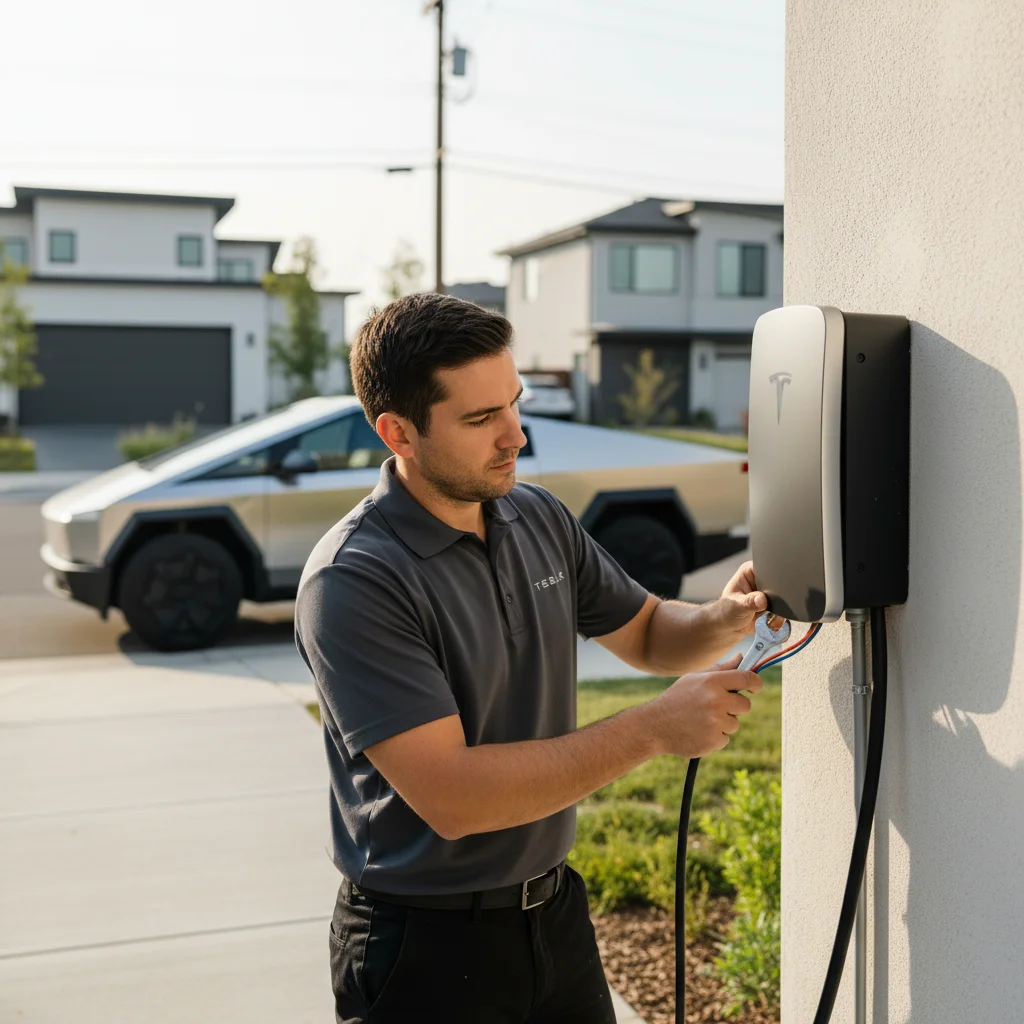
What Tesla’s 2026 roadside page actually says
Tesla’s roadside-assistance page is blunt about a dead pack. Search indexes showed this wording on September 5, 2026. When the pack is empty, Tesla says it can help. That’s if you can’t reach a charging station. It also says that help isn’t a financially covered service. The next step it names is transportation.
That isn’t a fresh twist for 2026. It’s the same empty-pack answer owners already knew. The current wording still doesn’t roll a charger to the car. It arranges a move.
Warranty transport sits in a different bucket. Tesla’s support language covers transport of up to 500 miles to the nearest Service Center. That ride is for a warrantable breakdown that leaves the car undrivable. Running out of charge sits outside that bucket. Tesla can still tow an empty car. That move isn’t the free warranty ride.
We couldn’t open Tesla’s live roadside page in this research pass. tesla.com blocked automated fetches. The sentences above come from Tesla’s own page as search indexes showed it. Confirm the live wording at tesla.com/support/roadside-assistance before you lean on it. Tesla also publishes a North America roadside policy PDF. The file path is tesla.com/sites/default/files/Updated_NA_Roadside_Policy_0.pdf.
Tesla’s roadside number, printed on the Santa Ana service page, is 877-798-3752. You can still call that line. Most owners start in the app anyway.
For billed versus covered calls, read what Tesla roadside assistance covers, and what it bills. The empty-pack question is in whether Tesla roadside is free when you run out of charge.
Why this rule lands hard on Orange County Tesla drivers
Orange County is a Tesla-heavy county. The counts come from the California Energy Commission, not a brochure. As of December 31, 2025, the CEC counted 210,842 battery-electric cars on Orange County roads. Teslas were 138,121 of those BEVs. That’s 65.51% of the county’s battery-electric fleet. Statewide, Tesla’s share of BEVs was 61.34%. Orange County sits 6.4 percentage points more Tesla-concentrated than the state.
Those Teslas are 5.59% of all light-duty vehicles here. ZEVs as a group were 260,833. That’s 10.56% of the light-duty fleet. California’s ZEV share was 7.54% in the same file. Orange County holds 12.02% of California’s battery-electric vehicles. It’s 8.33% of the state’s light-duty fleet.
New sales still lean electric, with a caveat. In 2025, ZEVs were 28.76% of new light-duty sales in Orange County. The state’s figure was 22.93%. In 2026 Q2, Orange County’s ZEV share of new sales was 24.77%. That’s 10,469 of 42,264 new light-duty sales. The state’s share was 19.09%. Orange County runs about five to six points above the state. The trend isn’t a straight climb. California’s ZEV share of new sales peaked at 25.31% in 2024. Don’t read this as adoption racing upward.
Tesla’s share of new Orange County ZEV sales was 56.9% in 2023. It fell to 47.2% in 2024, then 44.7% in 2025. The first half of 2026 came back to 56.4%. That’s 10,323 Tesla sales out of 18,293 new ZEVs. Plenty of new plates are still Tesla plates. Plenty of those drivers will meet this roadside rule.
Superchargers you can name, and Tesla’s empty-pack tow
Public charging here is documented. The CEC’s December 31, 2025 charger file lists 7,095 public ports in Orange County. That’s 20 Level 1, 5,600 Level 2, and 1,475 DC fast. Shared-private ports add 4,685. Public plus shared private totals 11,780. Orange County holds 7.75% of California’s public ports.
The crowding ratio is tighter than the state. Orange County has 36.8 ZEVs per public port. Statewide it’s 24.4. That’s a government-sourced number. It doesn’t tell you where any one stall sits. That explains why a busy Saturday can still leave a driver with an empty pack.
Tesla’s own DC fast network is most of the fast plugs. Federal AFDC station data was filtered to Tesla, public, and available. It shows 48 Supercharger sites inside the county line. Those sites hold 861 DC fast ports. Tesla holds 59% of Orange County’s public DC fast ports. All networks together: 223 DC fast stations and 1,452 ports. Without Tesla, that’s 175 stations and 591 ports.
Named Tesla sites from that AFDC pull include the big lots. San Clemente at 101 W Avenida Vista Hermosa has 49 stalls at up to 250 kW. AFDC lists that site as open since November 17, 2017. Irvine at 1920 Main St has 40 stalls at 250 kW. Tustin at 14661 Franklin Ave has 36 stalls at 250 kW. Garden Grove at 12891 Harbor Blvd has 32 stalls at 250 kW. Buena Park at 8888 Knott Ave has 28 stalls at 325 kW. Santa Ana at 1008 17th St has 28 stalls at 325 kW. Huntington Beach at 6913 Warner Ave has 24 stalls at 325 kW.
Mission Viejo’s Shops site at 555 The Shops is a caution. AFDC and Tesla disagree on power. Tesla lists 10 stalls at up to 72 kW. Use Tesla’s 72 kW figure if you’re planning around that lot.
Lake Forest’s Magic Dock site sits at 24372 Rockfield Blvd. The AFDC record is dated August 28, 2026. That’s 16 stalls at 325 kW, CCS1 plus NACS. Garden Grove’s Valley View Starbucks site is dated June 26, 2026. It lists 16 stalls at 500 kW.
None of those stalls drive to you. If the pack is already at zero, Tesla’s policy still buys a transporter. It doesn’t buy a plug on the shoulder. Tesla at zero on an Orange County road walks that choice. Empty pack versus a warrantable breakdown is the coverage split in one place.
Non-Tesla DC fast exists too. Electrify America lists 30 stations and 138 DC fast ports in the same AFDC county pull. EVgo lists 30 stations and 131 ports. Flagship records include Electrify America at 25825 Las Vegas in Capistrano Beach with 12 DC fast ports. Electrify America at Fashion Island lists 8 DC fast ports. EVgo at Plaza Antonio in Rancho Santa Margarita lists 14. Those are destinations after you have miles again. They aren’t a charger that comes to a dead pack.
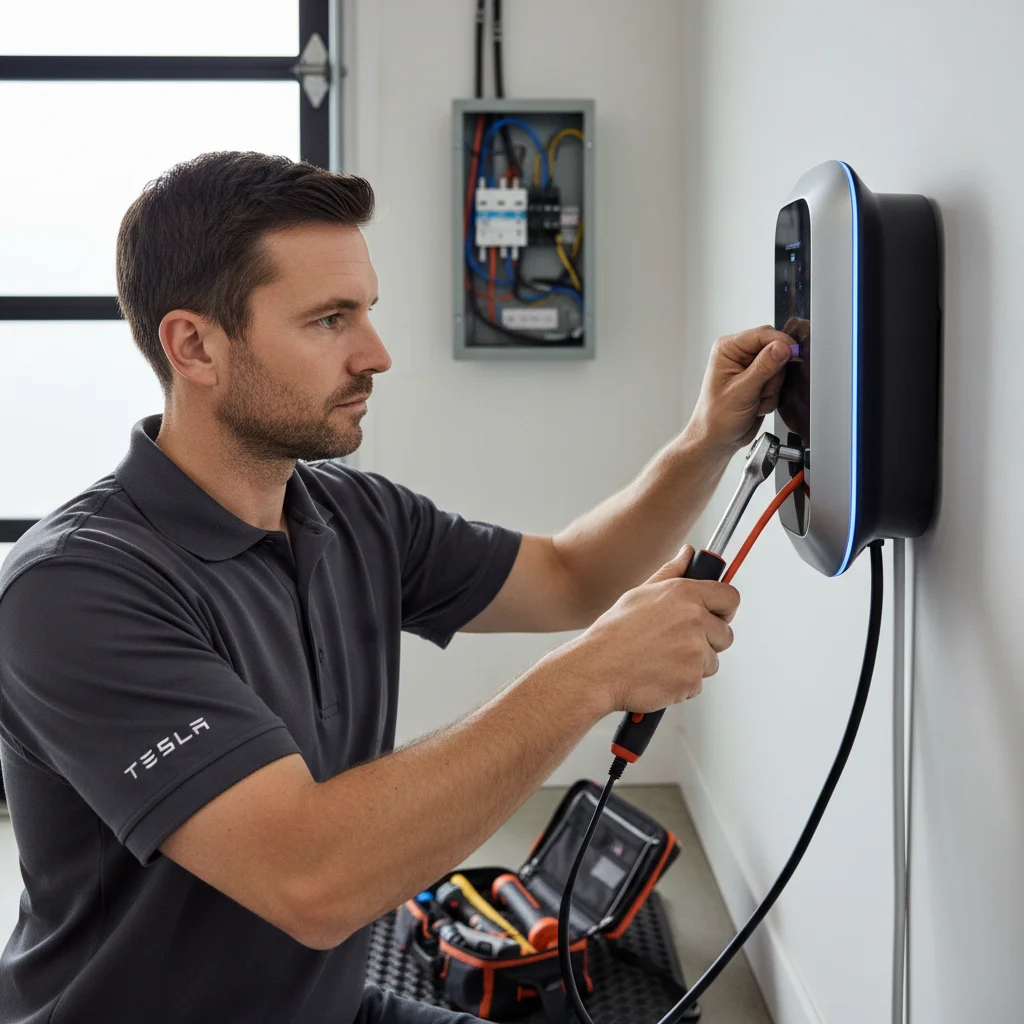
What an empty pack does to the 12V
Tesla’s Model Y owner’s manual is the clean technical source. Once range is gone, the low-voltage battery can lose support. The car then needs an external power supply before the high-voltage pack can take a charge. That’s why an empty Tesla can look fully dead. Door handles, screens, and the app path all lean on that small battery.
A tow still leaves you with a silent car on a hook. A 12V jump plus a 240V charge at the bumper is a different job. Tesla’s published roadside language doesn’t describe that second job. Local operators do.
Tesla Service Centers Tesla lists in Orange County
Tesla lists service in Costa Mesa, Buena Park, Santa Ana, Irvine, Anaheim, and Aliso Viejo. Those city names come from Tesla findus listings. Direct fetches of tesla.com failed during this research. Confirm the street in the Tesla app or on tesla.com/findus before you navigate there.
A warrantable breakdown can still earn that 500-mile transport to a Service Center. An empty pack doesn’t. If a contractor shows up for a paid tow, you’re moving the car. The destination is a stall or a shop. You’re not putting miles back in the pack on the spot.
What a local operator brings instead of a tow
Charge Pro OC is a referral line. It doesn’t own trucks. It doesn’t employ technicians. It matches you with an independent local operator. That operator quotes you before work starts, then bills you directly.
What those operators bring is a 240V Level 2 source to the car. Teslas take a native NACS plug. Other EVs use a CCS or J1772 adapter. Typical charging time puts about 10 to 20 miles back in 15 to 30 minutes. That’s session time at the bumper. It isn’t an arrival promise.
They can also jump or replace a dead 12V on site. They handle Tesla and the other major EV brands. Tesla roadside rescue is the service page for this empty-pack case.
You can still request Tesla transport. You can also request a charge where you sit. Those are different products. Tesla’s 2026 policy didn’t merge them.
How to ask Tesla, then how to ask locally
In the Tesla app, open Roadside Assistance on the car’s card. Screenshot the request and whatever status screen you get. If a third-party tow arrives, note the company name and truck number. Photos of the dash messages help if you later dispute a bill.
If the 12V is already dead, the app may not talk to the car. That’s the catch. Tesla’s phone line is still 877-798-3752. A person at the bumper can jump the 12V without the app loop.
Don’t wait on invented arrival math. Tesla doesn’t publish a county response clock we could verify. Charge Pro OC doesn’t publish one either. The operator who takes your job sets the quote. You accept it, or you don’t.
When this referral line is the better fit
Use Tesla first when the car has a warrantable fault. That’s the path if you want transport to a Service Center. Use a local charge when the pack is empty and you want miles, not a hook. Use both if you already tapped Tesla and still need range where you sit.
Orange County’s Supercharger map is thick in Anaheim, Irvine, Tustin, Garden Grove, and San Clemente. A packed site still leaves you in the same policy bucket. So does a dead 12V, or a car that’s already at zero. Tesla’s answer remains transport. The operators we connect you with bring the 240V lead.
For Tesla, AAA, and a local truck side by side, read how the 2026 options differ. City-level charger context lives on the Orange County EV charging hub.
If you need a quote on an empty pack or a dead 12V, call (949) 444-0151. Charge Pro OC refers the job. The operator on the other end quotes you before anything starts.
Frequently asked questions
Does Tesla’s 2026 policy charge your Tesla on the shoulder?
No. Tesla’s published roadside language answers a depleted pack with transportation. That help isn’t a financially covered service. Confirm the live page before you assume a rewrite.
Is a tow to a Service Center free when you run out of charge?
Tesla’s 500-mile transport is for a warrantable breakdown that leaves the car undrivable. An empty pack sits outside that. Tesla can still arrange a paid tow.
What if the 12V is dead and the app won’t open a request?
The owner’s manual notes the low-voltage pack can lose support once range is gone. A mobile operator can jump the 12V at the car. Then they can add a 240V charge without waiting on the app.