Your Tesla is at zero on the I-5 shoulder south of Irvine. Tesla Roadside Assistance still sits in the app. That tap isn’t a free charge for an empty pack.
Tesla can still send help when the pack is depleted. Tesla’s own roadside page treats that help as assistance you arrange, not as a financially covered service. Search indexes of tesla.com/support/roadside-assistance carried that wording on September 5, 2026. Open Tesla’s page in a browser before you rely on it. Automated fetches of tesla.com were blocked during that research run, so confirm the live sentence.
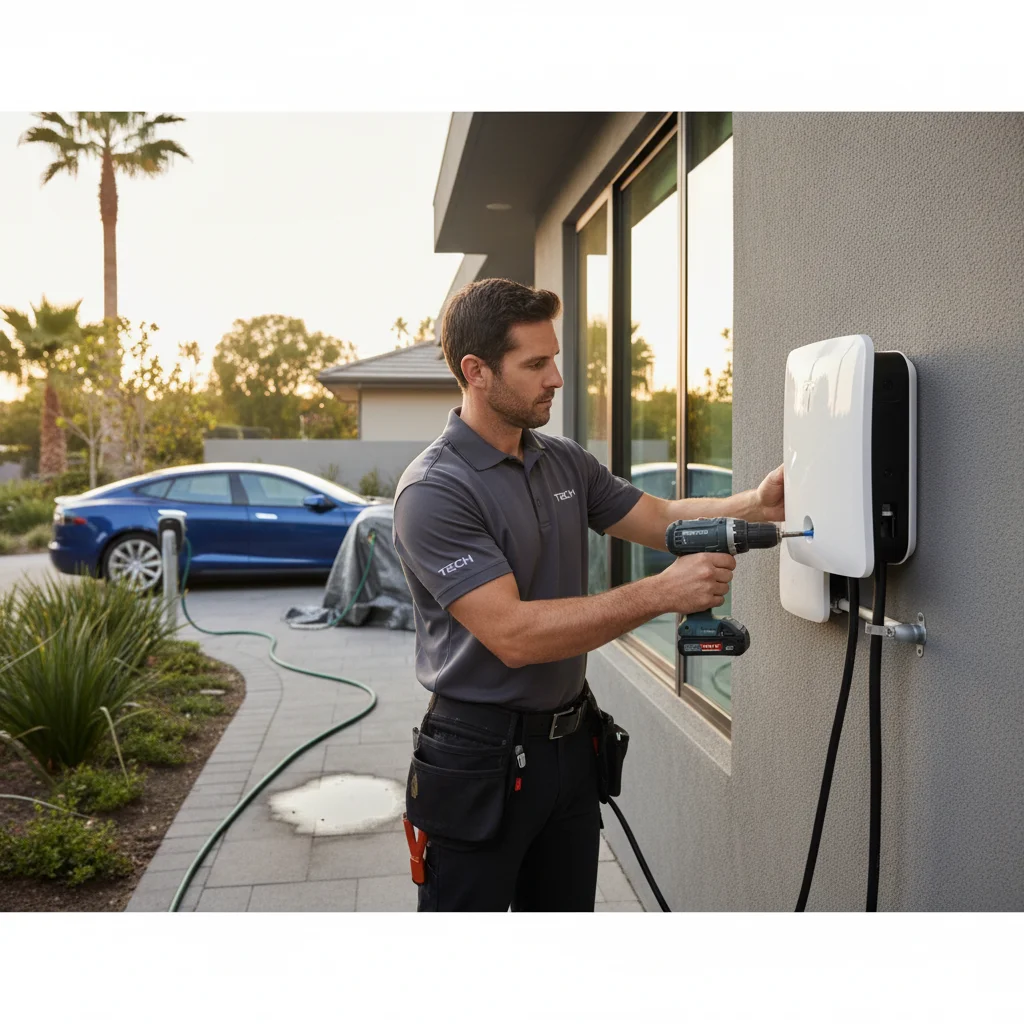
Tesla’s published answer when the pack is empty
Tesla’s indexed roadside language is plain. If the pack is depleted and you can’t reach a charging station, Tesla can assist you. That assistance isn’t a financially covered service. Tesla then tells you to contact Tesla Roadside Assistance to learn more or arrange transportation.
The same indexed page draws a different line for breakdowns. Tesla’s transport of up to 500 miles is for a warrantable breakdown. That ride is to the nearest Service Center, and only if the car is undrivable. An empty pack isn’t that breakdown. Confirm both sentences on Tesla’s roadside page. The source was snippet-indexed, not opened as a live tab.
Tesla’s roadside number, published on the Santa Ana service page, is 877-798-3752. Use it when you want Tesla’s own dispatcher. Don’t treat that call as a prepaid empty-pack rescue.
Empty pack vs a warrantable breakdown is the split that matters. What Tesla roadside assistance covers, and what it bills stays on coverage, not invented prices.
What not financially covered means on the street
Tesla can still book a tow or send a contractor. Tesla isn’t promising to cover the invoice. Running out of charge is treated as a range miss, not as a warrantable defect.
Tesla’s policy answers a depleted battery with transportation. It doesn’t answer it with a charge at the bumper. That’s the fair reading of Tesla’s own roadside page. Don’t quote Tesla as saying it offers no mobile charging. No Tesla page in that research run used that sentence.
Tesla also didn’t publish a stable public rate sheet we can cite here. If Tesla quotes a number, get it before you approve the hook. Charge Pro OC doesn’t set Tesla’s prices, and it doesn’t set operator prices either.
Why empty Teslas are an Orange County problem
This county is Tesla-heavy by the state’s own count. As of December 31, 2025, the California Energy Commission recorded 210,842 battery-electric vehicles in Orange County. Teslas were 138,121 of those BEVs. That’s 65.51% of the county’s battery-electric fleet. It’s also 5.59% of all light-duty vehicles here. California’s Tesla share of BEVs was 61.34%. Orange County is 6.4 points more Tesla-concentrated than the state.
New sales still lean Tesla too. In 2025, Tesla was 44.7% of Orange County’s new ZEV sales. In the first half of 2026, that share was 56.4%. A lot of the cars that run out here are Teslas.
The Supercharger map is large. The Alternative Fuels Data Center, from DOE and NREL, listed 48 Tesla Supercharger sites inside the county. Those sites hold 861 DC fast ports. Tesla holds 59% of Orange County’s public DC fast ports. Those stalls are real. They don’t move a car that already sat down.
CEC’s charger file for December 31, 2025 counted 7,095 public ports in Orange County. The county had 260,833 ZEVs. That’s 36.8 ZEVs per public port. Statewide the same ratio is 24.4. Orange County is thinner per EV than California as a whole.
Stalls you might have been aiming for
AFDC lists these Tesla sites with stall counts you can check. Anaheim, 2404 E Katella Ave: 16 stalls, up to 250 kW. Anaheim, 2270 E Lincoln Ave: 20 stalls, up to 325 kW. Irvine, 1920 Main St: 40 stalls. Garden Grove, 12891 Harbor Blvd: 32 stalls. Tustin, 14661 Franklin Ave: 36 stalls. Huntington Beach, 6913 Warner Ave: 24 stalls, up to 325 kW. Santa Ana, 1008 17th St: 28 stalls, up to 325 kW. San Clemente, 101 W Avenida Vista Hermosa: 49 stalls, the county’s largest Tesla stall count.
Mission Viejo, 555 The Shops at Mission Viejo: 10 stalls. Tesla’s own listing puts that site at up to 72 kW. Use Tesla’s 72 kW figure, not AFDC’s power field, when the two disagree.
A Model Y dead on SR-22 near the Crush can’t roll to 1008 17th Street. A Model 3 finished in a Huntington Beach lot can’t assume Warner Avenue is still in range. The car needs a tow, or energy where it sits.
If you died on I-5 with a few miles left, stay on the shoulder. Empty on I-5 south of Irvine is the playbook.
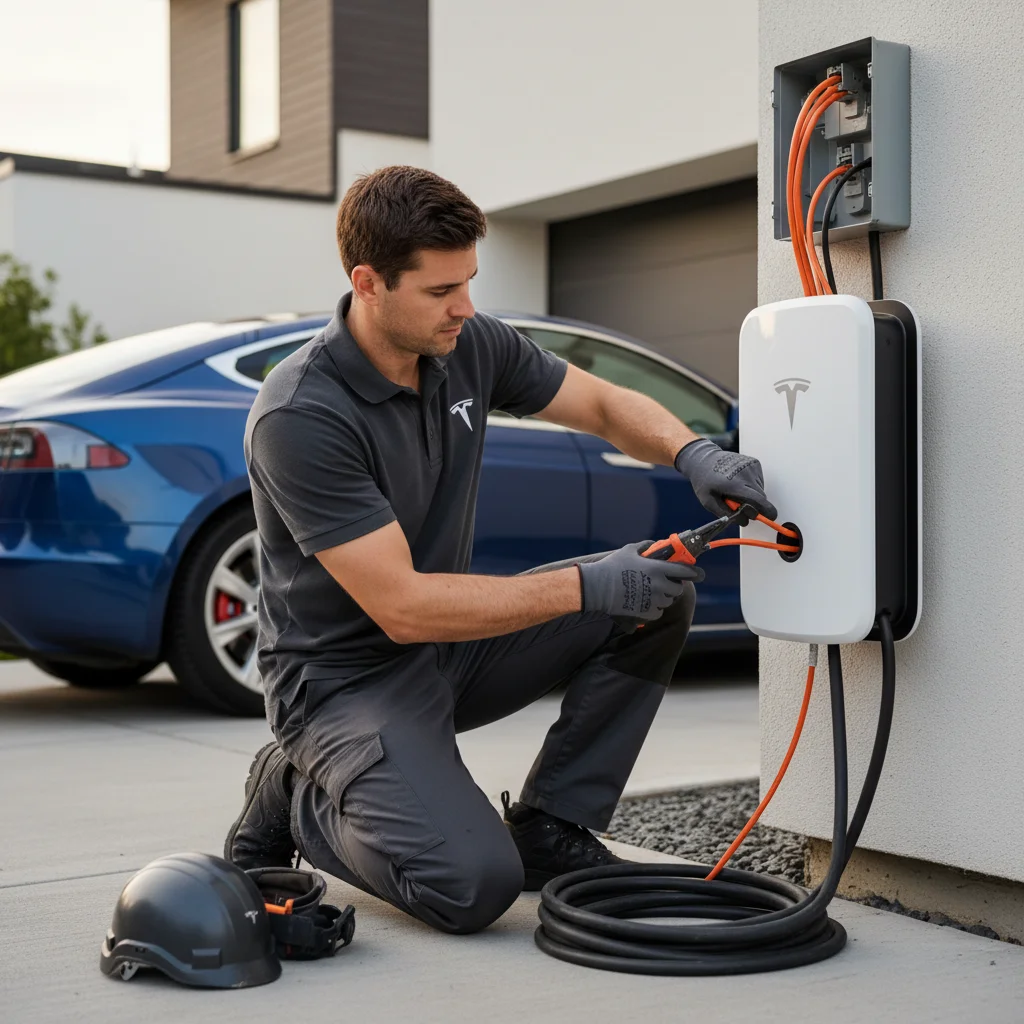
What the car does at true zero
Tesla’s Model Y owner’s manual describes a second failure that follows an empty pack. Once range is exhausted, the low-voltage battery can lose support. The high-voltage pack then needs an external power supply before it can charge. That’s why an empty Tesla can look fully dead. Screens go dark. Handles misbehave. The charge port may not cooperate.
A 12V jump can wake the car’s low-voltage side. It doesn’t refill the traction pack. If you’re at zero miles, you still need energy into the high-voltage system. The other path is a tow to a working stall.
If you can’t tell pack from 12V, start here. Dead Tesla: how to tell 12V failure from a dead pack is the fork.
Where Tesla may send the tow
Tesla service in Orange County is listed in Costa Mesa, Buena Park, and Santa Ana. Irvine, Anaheim, and Aliso Viejo have listings too. Search indexes showed street addresses on Tesla findus pages. Those pages weren’t opened directly in the research run. Confirm the address in Tesla’s locator before a tow heads there.
Tesla’s indexed 500-mile transport is for a warrantable breakdown. The destination is the nearest Service Center. An empty pack doesn’t unlock that covered transport. Tesla can still move the car. The bill is a separate matter.
What a local operator does instead
Charge Pro OC is a referral line. It matches stranded EV drivers with independent local mobile rescue operators. It doesn’t hold a trade license. It owns no trucks. It employs no technicians. It sets no prices and publishes no arrival time.
The operators in that network bring a 240V Level 2 source to the car. Teslas take a native NACS plug. Non-Tesla EVs use a CCS or J1772 adapter. A typical session adds 10 to 20 miles of range in 15 to 30 minutes of charging. That window is charging time. It isn’t a promise about when a truck appears.
Operators can also jump or replace a dead 12V on site. They handle Tesla and every major EV brand. The operator quotes you before starting and bills you directly.
Tesla’s published empty-pack path is transportation you should expect to pay for. A local Tesla roadside rescue is a charge at the bumper so you can drive to a stall. If you already know the pack is empty, out of charge recovery is the matching job.
What’s an EV charging truck, and how mobile rescue works here explains what actually shows up.
Shoulder, lot, or driveway
Stay in the vehicle on a fast shoulder. Keep the hazards on. Don’t walk lanes looking for a plug. I-405, the 91, I-5, and SR-22 aren’t places to hunt a stall on foot.
A Tesla tow still has to reach that shoulder. A mobile Level 2 session can happen there too. That only works once an operator is on site and the scene is safe. Neither option is free Tesla roadside when the only problem is an empty pack.
Lot calls are quieter. Theme-park structures in Anaheim already have the car stopped. So do Huntington Beach and Newport Beach lots, plus Irvine and Tustin office parks. Tesla may still treat it as depleted-battery transport. An operator can charge in the space you already occupy.
If the 12V has collapsed on top of the empty pack, say so when you call. The work may start with a jump, then a 240V session.
Who to call from the seat
Call Tesla at 877-798-3752 if this looks like a warrantable breakdown. A drive unit that quit with range still showing belongs on Tesla’s path. Tesla’s 500-mile transport language is for that kind of failure.
Call a local operator if you watched the range hit zero. Tesla’s indexed answer is already on the table: not financially covered. You need energy, not a warranty debate.
Charge Pro OC serves every city in Orange County. The pros we connect you with are licensed and insured. They quote before they start.
When you want that referral, call (949) 444-0151. Say where you sit, and whether the screens still wake.