The kiosk says connected, but your Orange County EV isn’t taking power. That’s a common miss here, and the port math shows why. Countywide there are 36.8 ZEVs for every public port, versus 24.4 statewide. A lit stall is often a busy stall, not a working one.
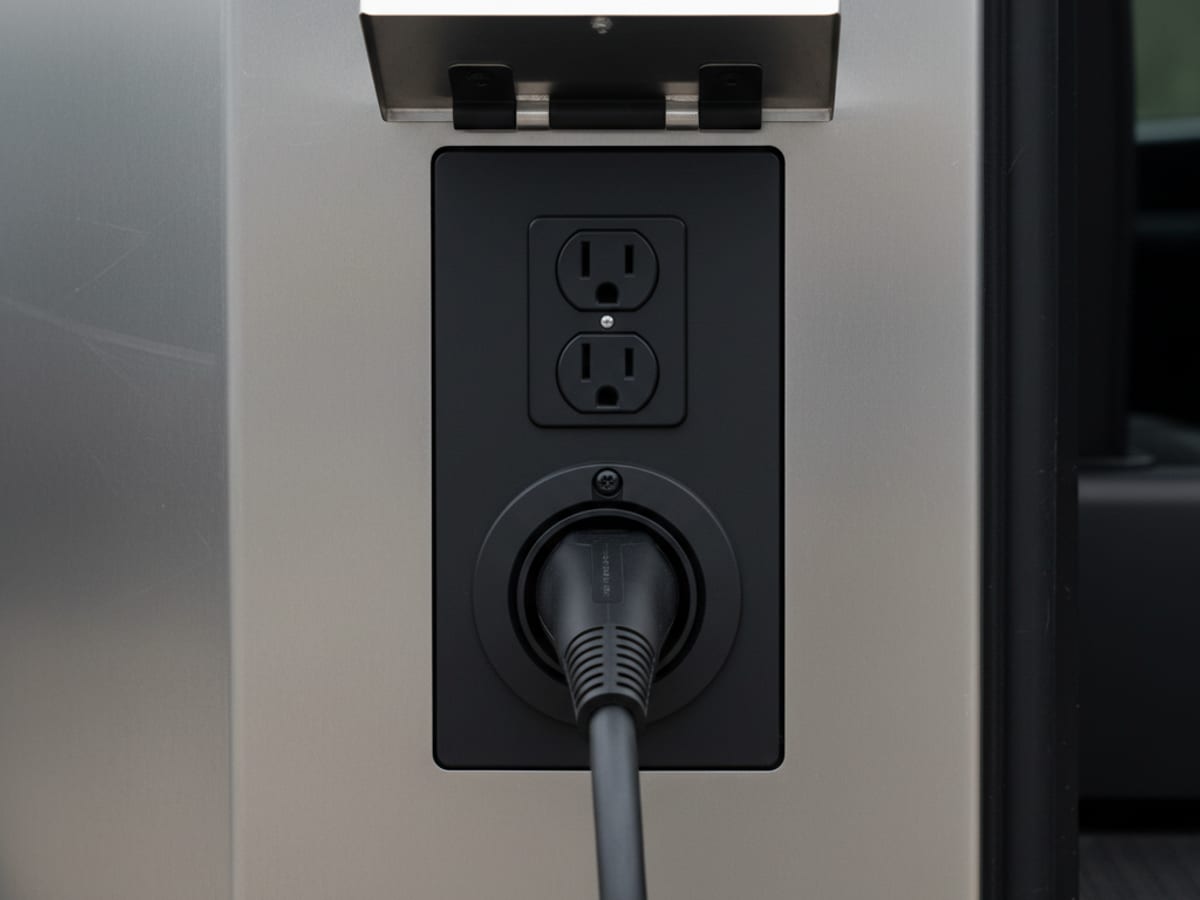
Connected isn’t the same as charging
A public stall has to finish three steps before current flows. It confirms the plug is in. It checks your account or card, then it releases power. The word connected only covers the first step.
The kiosk can flip to charging as soon as it sees the car. The billing system may still be catching up. If the kWh counter hasn’t moved, trust the car, not the pedestal. This isn’t the same as a stall that never starts. The hardware thinks it did its job.
Why a connected stall is often a dead stall
Orange County held 210,842 battery-electric cars at year-end 2025. Public ports totaled 7,095 across the county. Most of those are Level 2, 5,600 of them. Public DC fast ports numbered 1,475. Teslas make up 65.51% of the county’s battery-electric fleet. Tesla also holds 59% of the public DC fast ports.
That mix parks a lot of cars on a modest port count. Orange County holds 12.02% of California’s battery-electric vehicles. It’s only 8.33% of the state’s light-duty fleet. The CEC compiled those port counts from surveys, AFDC, and PlugShare. They’re updated twice a year, so a dead stall can linger on the map.
Big sites still hide idle hardware in plain sight. Irvine’s Supercharger at 1920 Main Street has 40 stalls. Garden Grove’s Harbor Boulevard site has 32. San Clemente’s Avenida Vista Hermosa site has 49. Fashion Island’s Electrify America station has 8 DC fast ports. Any of those can show connected while your percent sits still.
ChargePoint has the most DC fast sites here, 71 of them. Many are single-plug dealership or office units. That’s about 1.1 ports per site. They’re often not a rescue-grade cabinet.
Westminster Mall’s Tesla site is 24 stalls at 75 kW. Mission Viejo’s Shops site is 10 stalls at 72 kW, per Tesla. Fullerton’s Harbor Boulevard site can deliver up to 325 kW. A crawl on the first two isn’t always an authorization bug. It can be a slow cabinet sharing current with the next stall.
EVgo’s Plaza Antonio site in Rancho Santa Margarita has 14 DC fast ports. Electrify America’s Dana Point station has 12. If one stall hangs on connected, the neighbor stall is the faster test.
Open the network app before you keep tapping the kiosk. ChargePoint, EVgo, and Electrify America all show session status the screen hides. Our note on charging apps to open before you’re too low walks through that habit.
Checks that actually move the needle
Read your own charging screen first. If the kiosk says charging and your kWh hasn’t budged, the session is stuck. The car is the honest meter.
Then open the network app and find this session. Pending means authorization hasn’t finished, and failed or declined means payment never cleared. That’s not a cable problem.
Don’t mash the kiosk to retry, because that usually resends the same stuck request. End the session in the app and start a new one from your phone. A fresh authorization clears most stuck sessions.
If the app already shows an active, paid session, unplug fully. Reseat the connector until it latches. A shallow seat can block current after the network thinks it’s done.
Try another card in the app if the first one hangs on connected. An expired or flagged card can fail quietly. The kiosk still reports the plug as seated.
Non-Tesla drivers should confirm the inlet matches the handle. CCS, J1772, and NACS don’t all seat the same way. Lake Forest’s Rockfield Boulevard Magic Dock lists CCS1 and NACS. If the latch isn’t fully home, you’ll get connected with no current.
What the two screens usually mean
| Pedestal | Car screen | What’s going on | Your move |
|---|---|---|---|
| Connected, app declined | No power | Payment or account issue | New card, or RFID if you carry one |
| Connected | No kWh movement | Authorization still pending | Check the app, then restart from your phone |
| Charging | No kWh movement | Pedestal updated before power released | End and restart from the app |
| Charging | kWh crawling | Shared cabinet, neighbor stall pulling more | Move to an open neighbor stall if you can |
| Error or blank | Nothing | Hardware or network fault | Change stalls, then change sites |
If you’ve restarted, reseated, and confirmed a paid session, stop. A still-zero pack means that stall is done. Don’t keep debugging the same pedestal. Move to the next stall, then the next site. Our guide on a public EV charger not working covers that next layer.
When a stuck stall is about to strand you
Every idle minute is a minute your range isn’t climbing. If you’re already low, pick a path before the lot becomes a stranding. Hunting another stall only helps if you can actually reach it.
Tesla’s own roadside policy answers a depleted pack with transportation. It doesn’t send a charge to the car. A local operator is a different tool. The independent pros we connect you with bring 240V to the bumper. That’s Level 2, not a DC fast cabinet. They typically add 10 to 20 miles in 15 to 30 minutes of charging. That’s charging time, not a promise of when someone arrives. They handle Tesla and every major EV brand. They use a native NACS plug, or a CCS or J1772 adapter.
If a stuck public charger is about to strand you, skip the next kiosk hunt. Mobile EV charging is the on-site option. For the field version of that truck, read what a mobile EV rescue truck carries. When to stop hunting stalls is in your EV is running low.
On the coast, a Fashion Island session can hang the same way. That write-up is EV charging near Fashion Island. Inland Tesla lots have a separate playbook. See Garden Grove when the Superchargers are packed or offline.
Charge Pro OC is a referral line. It doesn’t run trucks or set a price. The operator quotes you before any work starts, then bills you directly. If the stall has already burned your buffer, call (949) 444-0151. We’ll match you with a local operator.
Frequently asked questions
What should I trust, the kiosk or the car?
The pedestal often updates as soon as it detects the plug. The network may not have released power yet. Your car’s kWh counter is the screen to trust.
When is a connected stall actually a dead stall?
Restart from the app once. If the car still shows zero after that, change stalls. A second wait on the same pedestal rarely pays.
Does a paid session in the app prove the plug is good?
No. The app tracks billing, not latch quality. A loose connector can still block current after authorization goes through.